




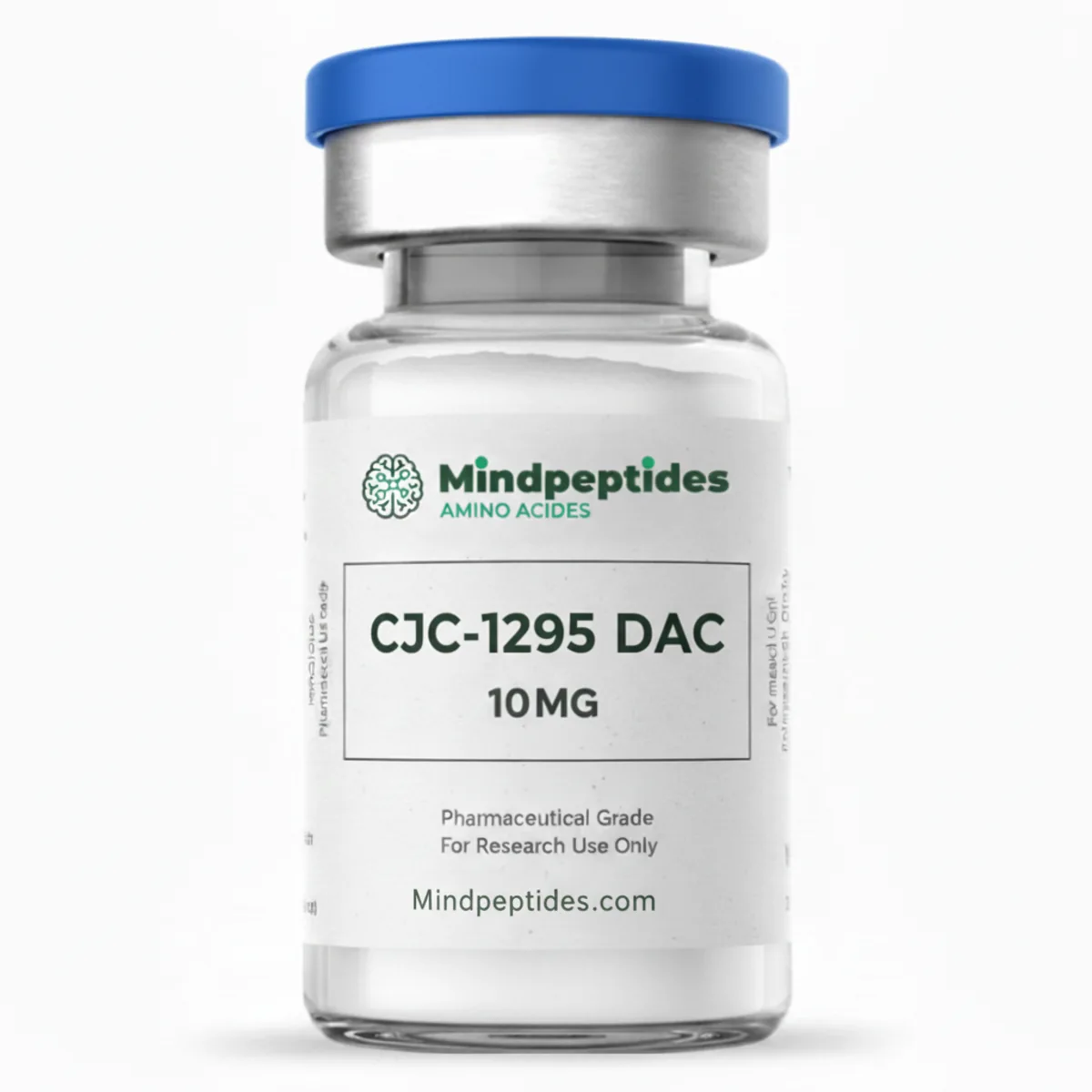
CJC-1295 + Ipamorelin Blend (10mg)
Synergistic GHRH & GH Secretagogue Research Peptide – HPLC Verified
Comprehensive Product Description
CJC-1295 + Ipamorelin Blend represents a premier peptide combination containing 5mg of CJC-1295 (without DAC) and 5mg of Ipamorelin, totaling 10mg of lyophilized research material. MindPeptides engineers this blend to facilitate advanced investigation into the dual stimulation of the somatotropic axis. CJC-1295 is a synthetic analogue of Growth Hormone-Releasing Hormone (GHRH) modified for enhanced resistance to enzymatic cleavage, while Ipamorelin is a highly selective pentapeptide agonist of the ghrelin/growth hormone secretagogue receptor (GHSR).
When researched individually, these peptides exhibit distinct half-lives and signaling intensities. However, the combination is formulated to leverage physiological synergism. By introducing an exogenous GHRH analogue alongside a potent GH secretagogue, researchers can observe a significantly amplified release of growth hormone (GH) compared to single-agent administration. This specific 1:1 ratio is designed to maximize the “area under the curve” (AUC) for GH secretion, providing a consistent and repeatable model for studying pulsatile hormone dynamics, metabolic signaling, and tissue repair mechanisms.
Mechanism of Action & Signaling Pathways
Dual-Pathway Synergism
The efficacy of this blend lies in its ability to target two distinct receptors on the pituitary somatotroph. CJC-1295 binds to the GHRH receptor, activating the cAMP-dependent pathway (Protein Kinase A), which increases the transcription of GH and provides the primary “release” signal. Simultaneously, Ipamorelin binds to the GHSR-1a receptor, triggering the Phospholipase C (PLC) and IP3 pathway to mobilize intracellular calcium stores.
Crucially, Ipamorelin acts to suppress the inhibitory tone of somatostatin, a hormone that typically limits GH release. By combining the positive GHRH signal (CJC-1295) with somatostatin inhibition and direct secretagogue activity (Ipamorelin), the somatotroph is primed for a maximal, yet physiological, secretory burst. This results in a potent release of GH which subsequently stimulates the hepatic secretion of Insulin-like Growth Factor 1 (IGF-1), the primary mediator of anabolic and reparative processes.
Expanded Research Applications
- Metabolic & Lipolytic Research:
The blend is extensively used to study the effects of elevated pulsatile GH on lipid metabolism. Research indicates this pathway promotes lipolysis and inhibits adipogenesis, offering insights into metabolic balance and body composition regulation. - Musculoskeletal Recovery & Repair:
Through the downstream upregulation of IGF-1, this combination is a key tool for investigating nitrogen retention, protein synthesis in myocytes, and collagen synthesis in connective tissues, relevant to injury recovery models. - Pulse Dynamics Analysis:
Laboratory settings utilize this blend to compare single-pathway vs. dual-pathway efficacy, specifically analyzing how combined inputs alter the frequency and amplitude of GH pulses without significant impact on cortisol or prolactin levels.
Laboratory Reconstitution Guidelines
MindPeptides supplies this blend as a stable lyophilized cake requiring careful reconstitution for assay use.
- Solvent: Bacteriostatic water (0.9% benzyl alcohol) is the standard standard for stability.
- Procedure: Inject solvent gently against the vial wall. Do not spray directly on the peptide. Swirl gently; never shake, as peptides are susceptible to shear stress degradation.
- Handling: Reconstituted solutions are temperature sensitive. Store at 4°C for short-term active research or aliquot and freeze for long-term stability.


Reviews
There are no reviews yet.