






Delta-Sleep-Inducing Peptide (DSIP)
Endogenous Neuromodulator for Sleep Architecture & Stress Response – HPLC Verified
Comprehensive Product Description
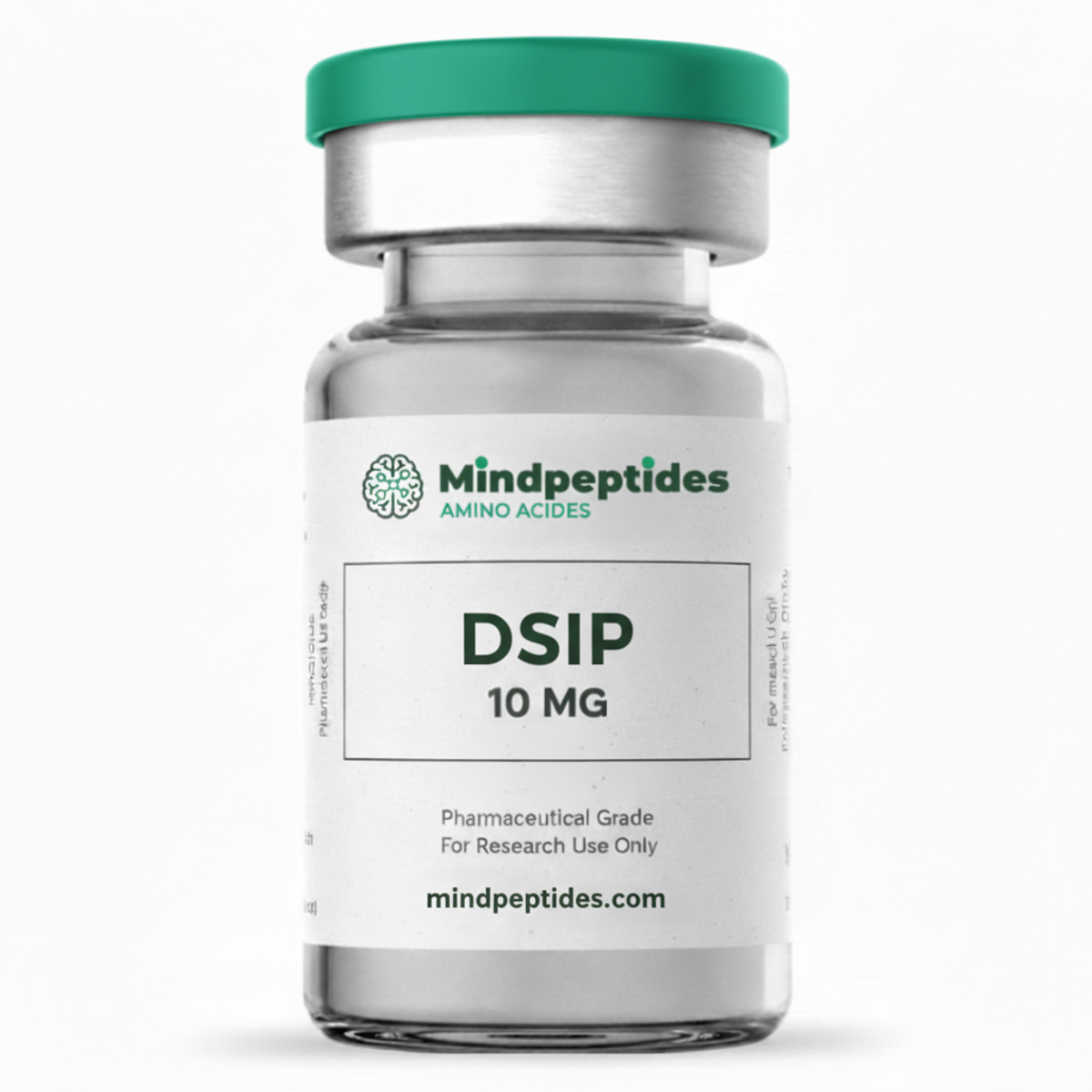
Delta-Sleep-Inducing Peptide (DSIP) is a naturally occurring nonapeptide, chemically characterized as Trp-Ala-Gly-Gly-Asp-Ala-Ser-Gly-Glu, originally isolated from the cerebral venous blood of rabbits during induced hypnogenic states. Unlike synthetic sedatives that force unconsciousness, DSIP is an endogenous regulatory peptide that acts as a neuromodulator. Mindpeptides synthesizes this sequence to exact physiological standards, providing researchers with a tool to investigate the biological substrates of sleep generation and circadian regulation.
The peptide is unique in its ability to cross the blood-brain barrier and influence the central nervous system (CNS) without causing the receptor desensitization often seen with synthetic agonists. Research indicates that DSIP does not merely induce sleep but rather facilitates the initiation of slow-wave sleep (delta waves) and modulates the baseline of the stress response. This makes it a critical reference standard for studies focusing on the intersection of neuroendocrinology, oxidative stress management, and myocardial physiology in controlled laboratory models.
Mechanism of Action & Signaling Pathways
HPA Axis Modulation & NMDA Stabilization
The mechanism of DSIP is pleiotropic. It is hypothesized to act as a “stress-limiting factor” by interacting with the Hypothalamic-Pituitary-Adrenal (HPA) axis. In experimental settings, DSIP administration has been observed to inhibit the release of Adrenocorticotropic Hormone (ACTH) and Cortisol, thereby dampening the physiological cascade associated with acute stress responses.
Furthermore, investigations suggest DSIP modulates the activity of glutamate receptors, specifically stabilizing NMDA receptors and altering GABAergic transmission. This activity contributes to its neuroprotective profile and its ability to normalize neuronal excitability. By reducing oxidative stress markers and preventing mitochondrial dysfunction in neuronal cells, DSIP helps maintain cellular homeostasis during periods of hypoxia or high metabolic demand.
Expanded Research Applications
- Sleep Architecture & Circadian Rhythms:
DSIP is utilized in EEG studies to map the distribution of sleep stages. It is particularly relevant for research into the promotion of Delta (slow-wave) sleep and the restoration of circadian timing cues disrupted by stress or environmental factors. - Cardioprotection & Contractility:
Raw data and subsequent studies highlight DSIP’s role in normalizing myocardial contractility. Research models of myocardial ischemia employ DSIP to evaluate its efficacy in preventing fibrillation and reducing reperfusion injury via antioxidant pathways. - Endocrine Regulation:
Used to study the suppression of somatostatin and the modulation of Growth Hormone (GH) and Luteinizing Hormone (LH) dynamics, offering insights into how sleep regulatory peptides influence the broader endocrine system.
Laboratory Reconstitution Guidelines
Mindpeptides supplies DSIP as a sterile lyophilized powder requiring careful reconstitution to maintain peptide integrity.
- Solvent: Bacteriostatic water (0.9% Benzyl Alcohol) or sterile HPLC-grade water is recommended.
- Procedure: Inject solvent gently onto the inner wall of the vial. Allow the cake to dissolve naturally. Do not vortex or shake vigorously, as this can shear the peptide bonds.
- Handling: Reconstituted DSIP is sensitive to enzymatic degradation. Keep at 4°C for short-term use (1-3 days) or aliquot and freeze at -20°C for long-term stability.


Reviews
There are no reviews yet.