





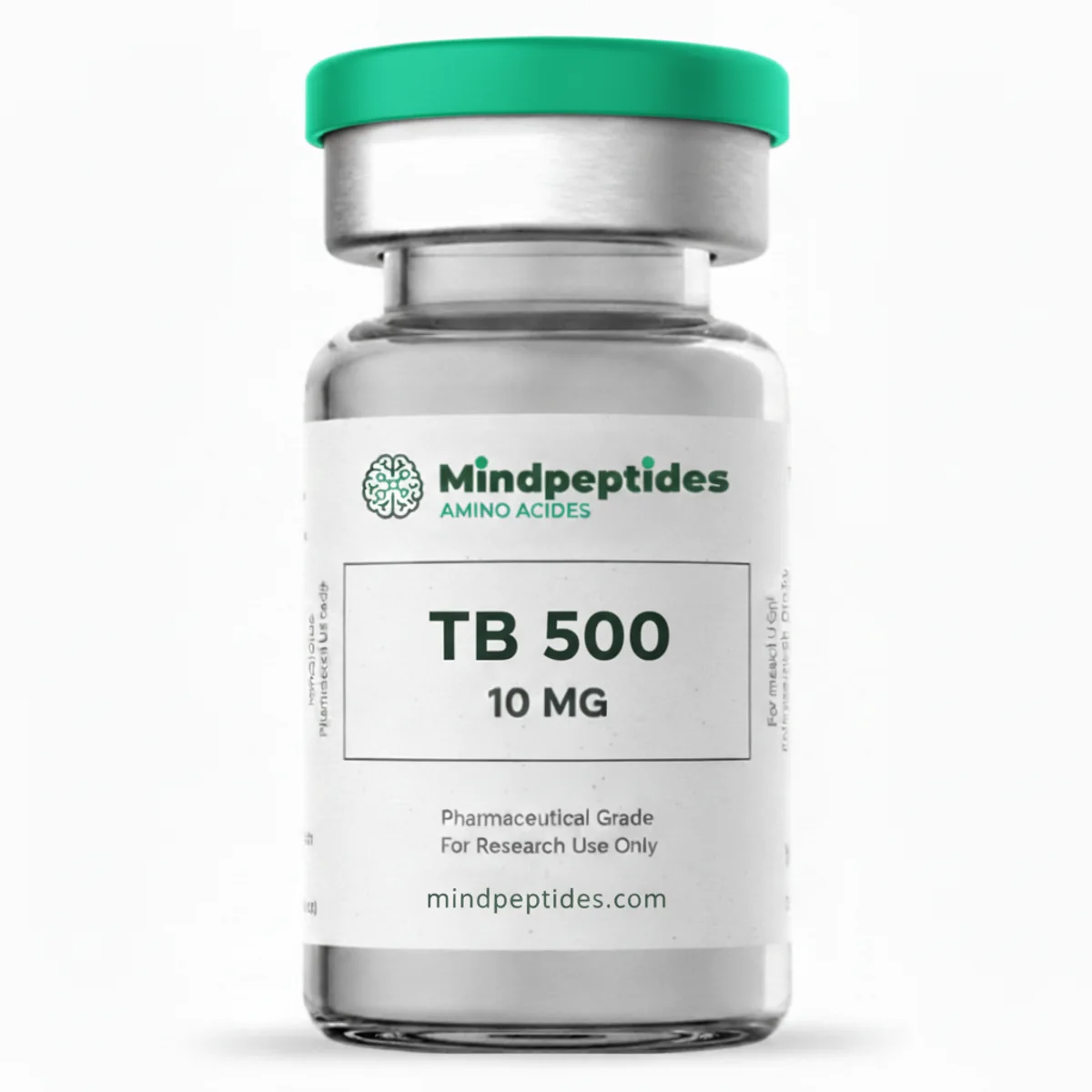
TB-500 (Thymosin Beta-4)
Actin-Sequestering & Tissue Regeneration Research Peptide – HPLC Verified
Comprehensive Product Description
TB-500 is a synthetic replicate of the naturally occurring peptide Thymosin Beta-4 (Tβ4). It consists of a 43-amino acid sequence that is ubiquitous in almost all human and animal cells. mindpeptides synthesizes this research peptide to facilitate the study of cytoskeletal structure and dynamics. In biological systems, Thymosin Beta-4 is recognized as the major G-actin sequestering molecule, playing a pivotal role in the organization of the cytoskeleton which governs cell morphology and motility.
Unlike shorter fragment derivatives, our TB-500 represents the full-length sequence, providing a complete profile for research into protection, tissue repair, regeneration, and remodeling of injured tissues. mindpeptides utilizes advanced Lyophilization (Freeze Drying) to manufacture this product. This cryodesiccation process involves freezing the peptides and subjecting them to low pressure, causing water to sublimate directly from solid to gas. This leaves behind a stable, crystalline white structure that ensures maximum stability during shipping and storage.
Mechanism of Action & Signaling Pathways
Actin Sequestration & Cell Migration
The primary mechanism of TB-500 involves its high-affinity binding to monomeric actin (G-actin). By sequestering G-actin, the peptide maintains a large pool of actin monomers that are prevented from polymerizing into filaments until signaled. Upon specific cellular cues, this pool is released, allowing for rapid polymerization (F-actin formation) essential for cell migration and cytoskeletal re-organization.
Furthermore, research indicates that TB-500 upregulation promotes angiogenesis (blood vessel growth) and may modulate the expression of inflammatory cytokines. Preclinical labs observe markers tied to the reduction of oxidative damage in cardiac and central nervous system tissues, suggesting a multifaceted role in the recovery of damaged cellular matrices.
Expanded Research Applications
- Cardiovascular Recovery Models: Studies in animal models have shown TB-500 to improve blood vessel growth and reduce scar tissue formation following ischemia-reperfusion injury, highlighting its potential in cardiac repair research.
- Wound Healing & Inflammation: TB-500 is extensively researched for its ability to regulate wound healing velocity. It is observed to decrease inflammation and recruit keratinocytes and endothelial cells to the site of injury.
- Cytoskeletal Dynamics: As a tool for studying cell mechanics, it is used to understand how cells “get to the right place” via actin-mediated motility during tissue maintenance and developmental processes.
Laboratory Reconstitution Guidelines
mindpeptides supplies TB-500 as a lyophilized powder (puffy white appearance) which is stable at room temperature for several weeks. However, proper reconstitution is critical.
- Solvent: Bacteriostatic water is recommended.
- Procedure: Inject solvent gently down the side of the vial. Do not shake. Swirl gently until the crystalline structure dissolves.
- Handling: Once reconstituted, peptides must be stored in the fridge (4°C) and are stable for up to 30 days. For long-term storage (months/years), the lyophilized powder should be kept in a freezer at -80°C (-112F).



Reviews
There are no reviews yet.