




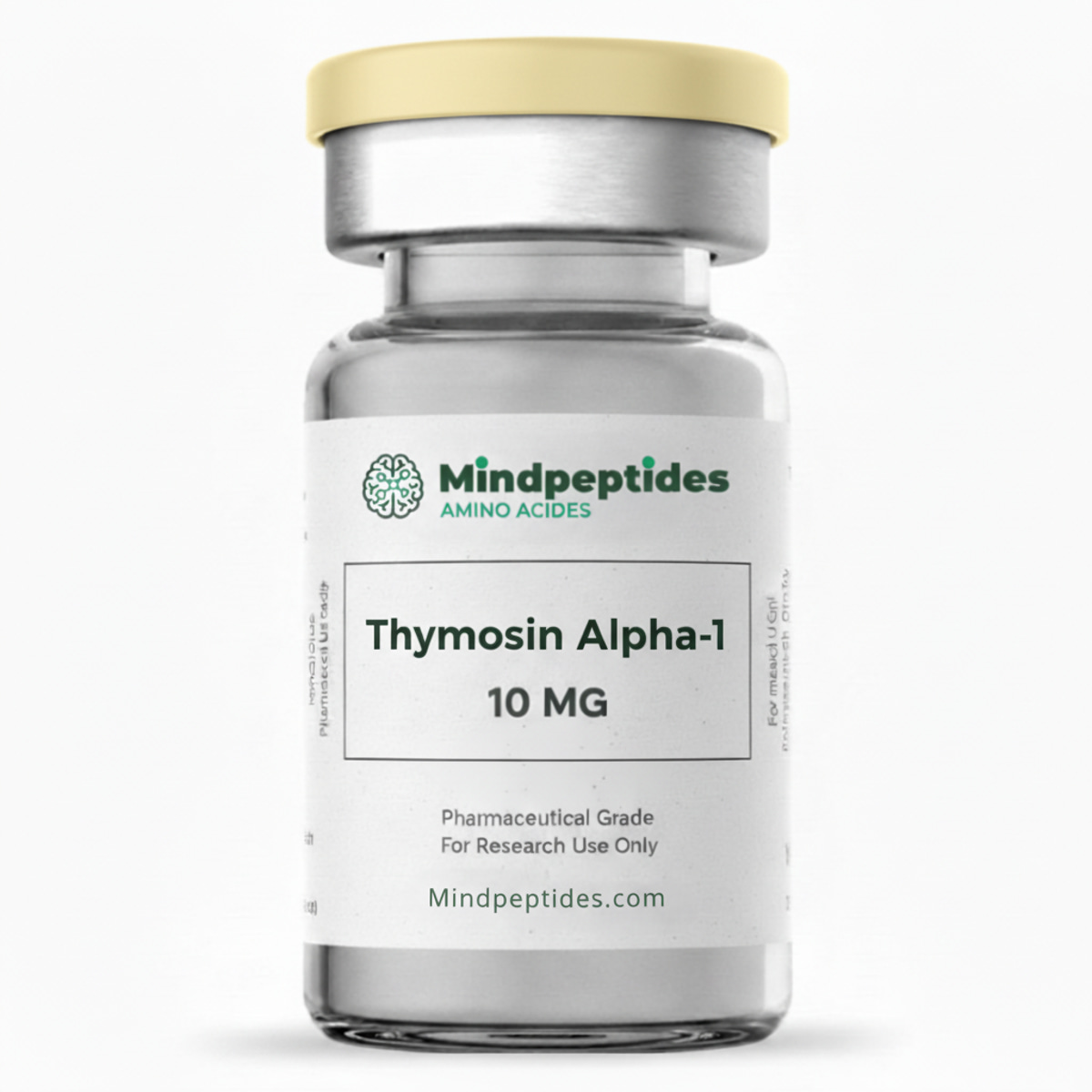
Thymosin Alpha-1
Thymic Peptide & Immune Response Modulator – HPLC Verified
Comprehensive Product Description
Thymosin Alpha-1 (Tα1) is a highly conserved, naturally occurring pleiotropic peptide originally isolated from thymic tissue (Fraction 5) in 1972. Chemically characterized as a 28-amino acid peptide with an acetylated N-terminus, it functions as a potent regulator of immune homeostasis. MindPeptides offers a synthetic, high-purity analogue indistinguishable from the endogenous biological response modifier. It is extensively researched for its ability to augment T-cell function and restore immune competence in immunocompromised models.
Unlike non-specific immunostimulants, Thymosin Alpha-1 exhibits a modulatory effect, meaning it helps the immune system “switch on” appropriate responses to challenges while preventing cytokine storms associated with hyper-inflammation. Research indicates its utility in studying cystic fibrosis, chronic hepatitis (B and C), respiratory disorders, and oncological resistance. By providing a ≥99% pure lyophilized peptide, validated by Mass Spectrometry and HPLC, we ensure that researchers observe signals derived strictly from the peptide’s interaction with pattern-recognition pathways, free from the interference of synthesis contaminants.
Mechanism of Action & Signaling Pathways
TLR9 Signaling & Dendritic Cell Activation
The primary mechanism of action for Thymosin Alpha-1 involves the modulation of Toll-like Receptor (TLR) signaling, specifically TLR9 and TLR2 present on myeloid dendritic cells (mDCs). Upon binding, Tα1 activates the p38 mitogen-activated protein kinase (MAPK) and NF-κB pathways.
This signaling cascade leads to the maturation of dendritic cells and a subsequent increase in the secretion of Th1-type cytokines, including Interleukin-2 (IL-2) and Interferon-gamma (IFN-γ). Furthermore, Tα1 promotes the differentiation of precursor T-cells into active CD4+ and CD8+ effector cells and enhances the expression of Major Histocompatibility Complex (MHC) Class I molecules on infected or malignant cells, thereby making them more visible to cytotoxic T-lymphocytes. This orchestrates a coordinated adaptive immune response essential for clearing viral pathogens and tumor cells.
Expanded Research Applications
- Infectious Disease Models: Used extensively to study immune restoration in chronic viral infections (e.g., Hepatitis B/C, Cytomegalovirus) and mycobacterial infections like Tuberculosis, focusing on T-cell exhaustion reversal.
- Oncology & Tumor Microenvironment: Research investigates Tα1’s ability to reduce tumor burden by enhancing CTL cytotoxicity and overcoming immune tolerance in melanoma and hepatocellular carcinoma models.
- CFTR Modulation in Cystic Fibrosis: Emerging studies suggest Tα1 may correct the trafficking of the mutant CFTR protein (ΔF508) and reduce inflammation in lung epithelial tissue, offering a dual-action pathway for respiratory research.
Laboratory Reconstitution Guidelines
MindPeptides supplies Thymosin Alpha-1 as a lyophilized powder which requires proper reconstitution prior to use in assays.
- Solvent: Bacteriostatic water is recommended.
- Procedure: Gently inject the solvent down the side of the vial. Do not shake vigorously. The lyophilized structure allows water to sublimate directly, leaving a stable cake that dissolves easily with gentle swirling.
- Handling: Once reconstituted, the peptide is stable for up to 30 days if stored at 4°C (fridge). For long-term storage (months/years), keep lyophilized at -80°C.


Reviews
There are no reviews yet.