






Tirzepatide (GIP/GLP-1 Agonist)
Dual Incretin Receptor Agonist & Metabolic Modulator – HPLC Verified Purity
Comprehensive Product Description
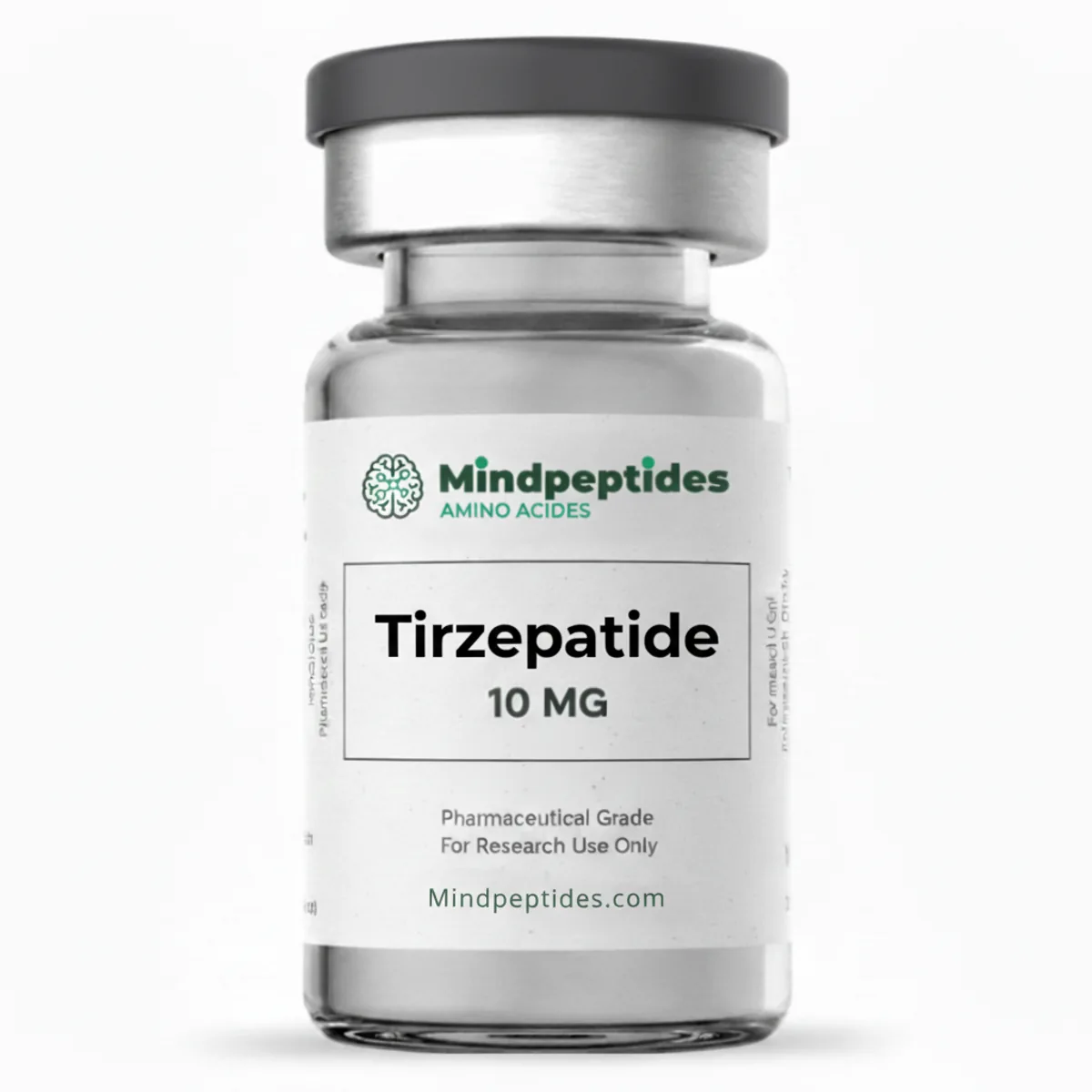
Tirzepatide is a novel, synthetic linear peptide comprising 39 amino acids, belonging to the emerging class of therapeutic agents designated as “twincretins.” Engineered for high-affinity dual agonism, it targets both the Glucose-dependent Insulinotropic Polypeptide (GIP) and Glucagon-like Peptide-1 (GLP-1) receptors. mindpeptides synthesizes this compound as a sterile, lyophilized reagent strictly for laboratory analysis and in vitro investigation.
Structurally, the peptide backbone is based on the native GIP sequence, modified to accommodate GLP-1 receptor binding activity. A critical structural feature introduced during synthesis is the conjugation of a C20 fatty diacid moiety via a hydrophilic linker. This modification facilitates reversible binding to plasma albumin, significantly extending the peptide’s half-life in research subjects compared to native incretins. This structural integrity allows for prolonged observation of metabolic regulatory mechanisms and overcomes the rapid enzymatic degradation typically observed with endogenous peptides.
Mechanism of Action & Signaling Pathways
Synergistic Incretin Activation
Tirzepatide functions through a unique mechanism of imbalanced dual agonism. It exhibits potency at the GIP receptor comparable to native GIP, while maintaining affinity at the GLP-1 receptor. Upon binding to these G-protein coupled receptors on pancreatic beta-cells, the peptide stimulates intracellular cAMP accumulation via adenylate cyclase activation.
This dual pathway activation promotes glucose-dependent insulin secretion and suppresses inappropriate glucagon secretion from alpha-cells. Furthermore, the synergistic activation surpasses the efficacy of selective GLP-1 receptor agonists in rodent models, driving significant improvements in glycemic parameters. The mechanism also extends to delaying gastric emptying and modulating neural pathways involved in satiety, providing a multi-faceted approach to metabolic regulation in research models.
Expanded Research Applications
- Metabolic Syndrome Investigation: Researchers utilize Tirzepatide to assess profound weight reduction and adipose tissue remodeling. Studies focus on the lipolytic effects and the regulation of lipid metabolism markers in obese phenotypes.
- Beta-Cell Function & Preservation: The peptide is critical in studies regarding islet cell proliferation and protection against apoptosis. It serves as a tool to evaluate the restoration of first-phase insulin secretion in diabetic models.
- Hepatocellular Studies (NASH): Evaluation of liver fat content reduction. Tirzepatide is employed to investigate the reduction of hepatic triglyceride accumulation and markers associated with Non-Alcoholic Steatohepatitis (NASH).
Laboratory Reconstitution Guidelines
mindpeptides supplies Tirzepatide as a lyophilized powder which requires proper reconstitution prior to use in assays.
- Solvent: Bacteriostatic water or sterile PBS is recommended. Note that 100mg variants are supplied in larger vials to accommodate required volume.
- Procedure: Gently inject the solvent down the side of the vial. Do not shake vigorously. Allow the peptide to dissolve at room temperature or with gentle swirling to avoid destroying the peptide structure.
- Handling: Once reconstituted, keep the vial cold (4°C) if used within days, or freeze at -20°C for long-term storage to maintain integrity.


Reviews
There are no reviews yet.