



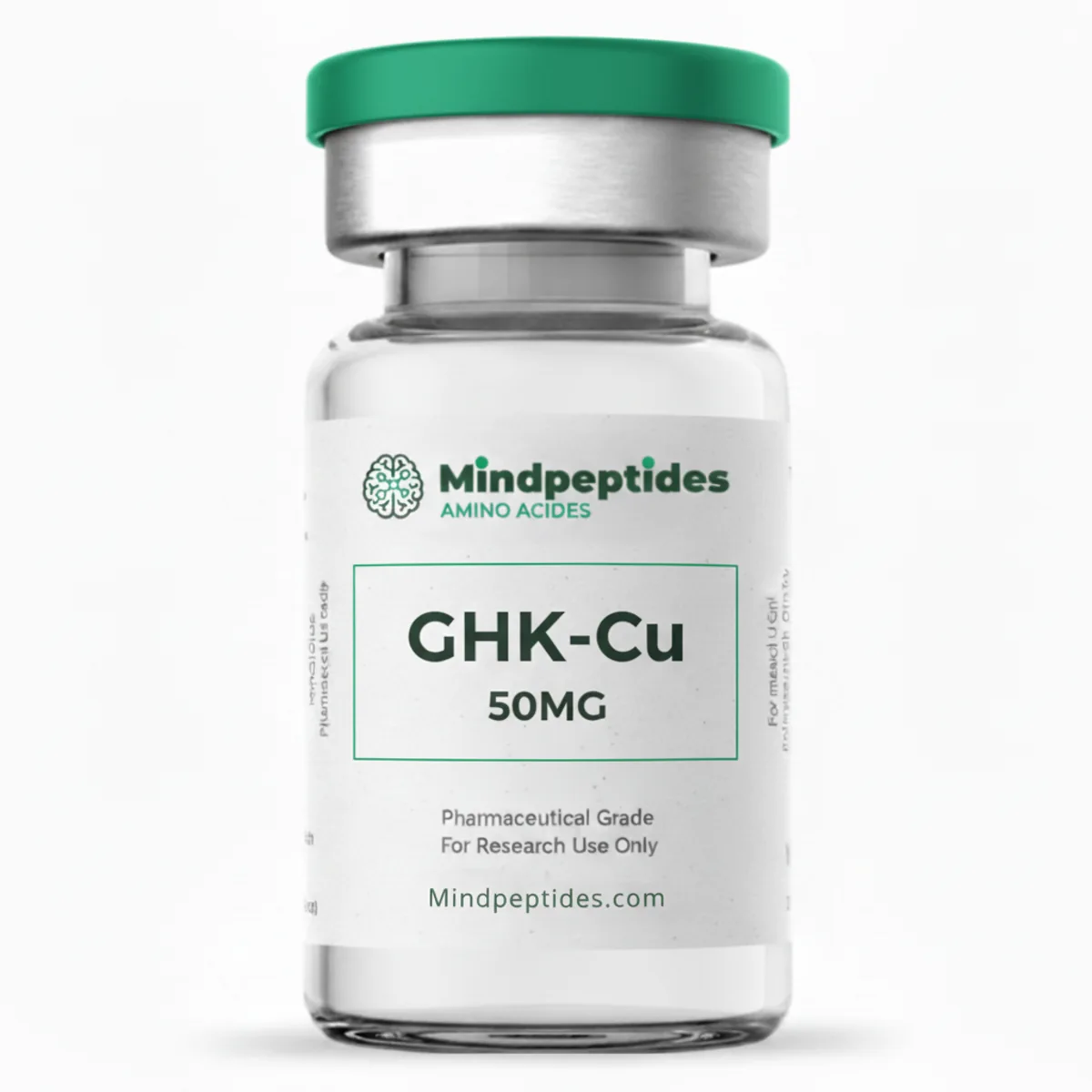
GHK-Cu (Copper Tripeptide-1)
Regenerative Signal Peptide & ECM Remodeling Agent – HPLC Verified
Comprehensive Product Description
GHK-Cu, chemically identified as the copper(II) complex of glycyl-L-histidyl-L-lysine, is a naturally occurring tripeptide originally isolated from human plasma. Research indicates it functions as a potent feedback signal generated after tissue injury, tasked with initiating regenerative processes. mindpeptides synthesizes this compound to exacting standards, ensuring the precise coordination of the copper ion with the peptide backbone, which is critical for its biological activity in controlled models.
While naturally occurring levels of GHK-Cu decline significantly with age, in vitro studies utilize this peptide to investigate extracellular matrix (ECM) modulation. Unlike generic preparations, mindpeptides focuses on repeatable consistency; each batch is identity-confirmed via mass spectrometry and purity-checked by HPLC to distinct analytical fingerprints. This rigorous characterization makes our GHK-Cu an essential tool for researchers studying wound healing dynamics, collagen deposition, and anti-inflammatory pathways without the interference of impurities.
Mechanism of Action & Signaling Pathways
Copper Translocation & Gene Modulation
The primary mechanism of GHK-Cu involves its ability to tightly bind and transport copper (Cu2+), a transition metal vital for numerous enzymatic reactions. Upon cellular uptake, GHK-Cu acts as a cofactor for lysyl oxidase, an enzyme essential for the cross-linking of collagen and elastin fibrils. This interaction directly supports the structural integrity of the ECM.
Furthermore, GHK-Cu is observed to modulate the expression of over 4,000 genes. It rebalances the ratio of Matrix Metalloproteinases (MMPs) and their Tissue Inhibitors (TIMPs), facilitating the removal of damaged proteins while stimulating the synthesis of new Types I and IV collagen. Additionally, the complex possesses potent antioxidant properties, neutralizing free radicals (such as superoxide anions) and suppressing oxidative stress markers like ferritin in damaged tissue.
Expanded Research Applications
- Wound Healing & Angiogenesis: Research models demonstrate GHK-Cu’s ability to accelerate wound closure by recruiting immune cells and stimulating the formation of new blood vessels (angiogenesis) through increased VEGF expression.
- Stem Cell Vitality & Anti-Senescence: Studies suggest GHK-Cu can restore the proliferative potential of senescent fibroblasts and increase the expression of p63 in epidermal stem cells, crucial for tissue renewal.
- Anti-Inflammatory & DNA Repair: The peptide is investigated for its ability to lower pro-inflammatory cytokines (TNF-α, IL-6) and promote DNA repair mechanisms in skin cells subjected to UV radiation or chemical aggression.
Laboratory Reconstitution Guidelines
mindpeptides supplies GHK-Cu as a lyophilized blue powder which requires proper reconstitution prior to use in assays.
- Solvent: Bacteriostatic water or sterile phosphate-buffered saline (PBS) is recommended.
- Procedure: Gently inject the solvent down the side of the vial. Do not shake vigorously. The vivid blue color is characteristic of the copper complex; allow it to dissolve fully with gentle swirling.
- Handling: Once reconstituted, keep the vial cold (4°C) if used within days, or freeze at -20°C/-80°C for long-term storage to prevent oxidation or dissociation.


Reviews
There are no reviews yet.