






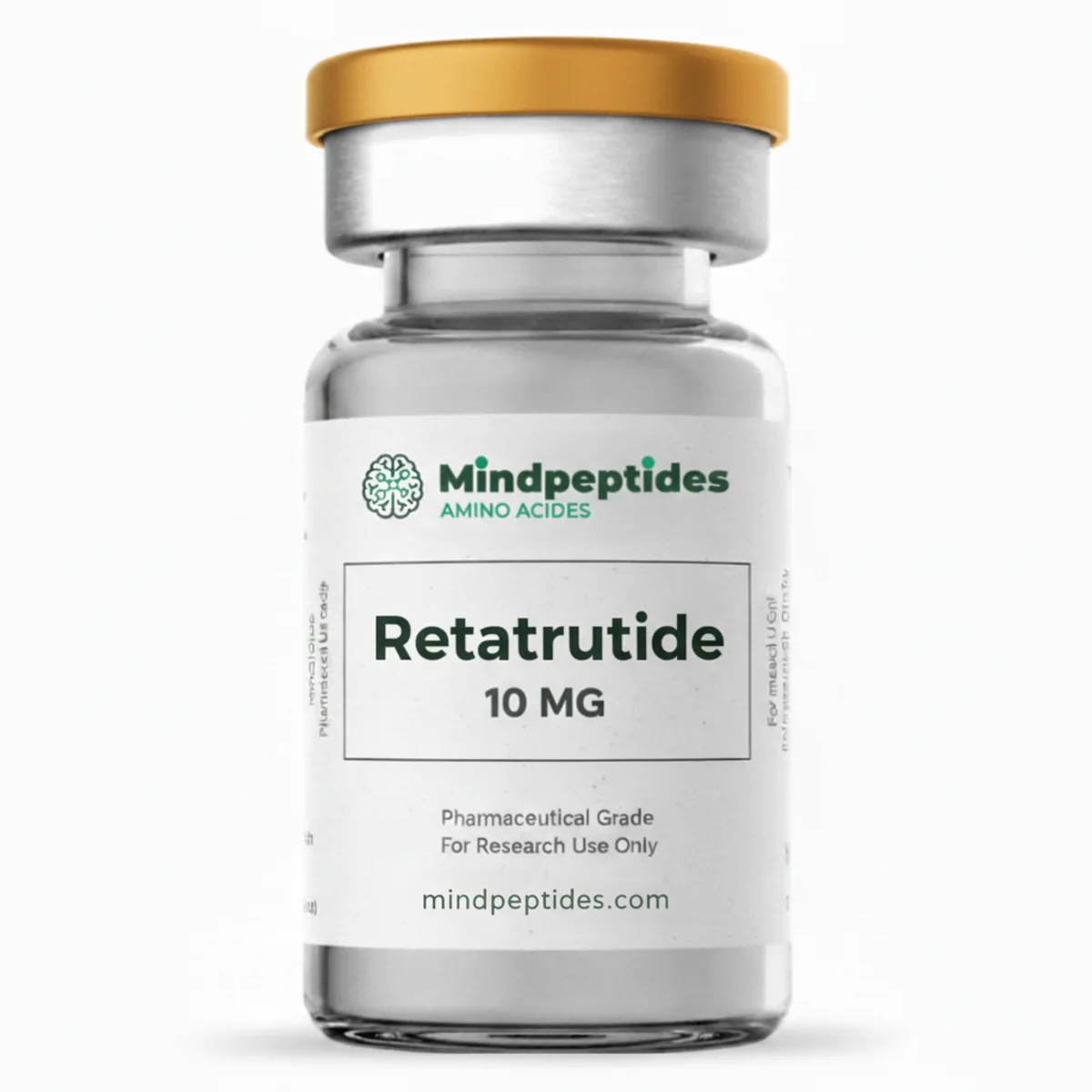
Retatrutide (LY-3437943)
Triple Hormone Receptor Agonist (GLP-1 / GIP / GCGR) – HPLC Verified
Comprehensive Product Description
Retatrutide is a novel, synthetic 39-amino-acid peptide that represents the vanguard of incretin-based research. It is chemically engineered as a triple agonist, possessing potent activity at the glucose-dependent insulinotropic polypeptide (GIP), glucagon-like peptide-1 (GLP-1), and glucagon (GCG) receptors. mindpeptides synthesizes this complex molecule to rigorous research standards to facilitate the investigation of multi-receptor metabolic modulation.
Unlike previous generations of mono-agonists (GLP-1 only) or dual-agonists (GLP-1/GIP), Retatrutide integrates a third modality: glucagon receptor activation. While GLP-1 and GIP signaling pathways are well-documented for their roles in delaying gastric emptying and modulating satiety, the addition of the glucagon component introduces a mechanism for enhanced energy expenditure and lipid oxidation. This “GGG” profile makes Retatrutide a critical tool for researchers studying the intersection of glycemic control, lipolysis, and hepatic health without the variables introduced by lower-purity reagents.
Mechanism of Action & Signaling Pathways
The Synergistic “GGG” Pathway
Retatrutide functions by simultaneously engaging three distinct G-protein coupled receptors. Upon binding to the GLP-1 and GIP receptors, it potentiates glucose-dependent insulin secretion and suppresses inappropriate glucagon secretion post-prandially, mirroring the effects of established incretin mimetics. This results in significant modulation of gastric motility and centrally mediated appetite signaling.
uniquely, Retatrutide also exhibits agonism at the Glucagon Receptor (GCGR). In a physiological context, glucagon is typically associated with raising blood glucose; however, within this tri-agonist framework, the GCGR activity drives mitochondrial energy expenditure and promotes lipolysis (fat breakdown) in adipose tissue. This complementary pathway allows researchers to observe net metabolic effects that exceed what is theoretically possible with incretin signaling alone, specifically regarding basal metabolic rate and hepatic lipid clearance.
Expanded Research Applications
- Advanced Metabolic Modulation:
Retatrutide is the primary substrate for investigating the upper limits of pharmacological weight management in animal models, specifically how triple-receptor engagement alters adiposity beyond the plateau effect seen in dual agonists. - Hepatic Steatosis & NASH:
Due to its glucagon receptor component, this peptide is extensively used in studies focusing on the reduction of liver fat content, investigating potential therapeutic pathways for Non-Alcoholic Steatohepatitis (NASH). - Comparative Pharmacology:
It serves as a benchmark reference standard for comparing efficacy against mono-agonists (e.g., Semaglutide) and dual-agonists (e.g., Tirzepatide) in glucose clamp studies and metabolic phenotyping.
Laboratory Reconstitution Guidelines
mindpeptides supplies Retatrutide as a stable lyophilized cake. Proper reconstitution is critical to maintain the integrity of the peptide’s tertiary structure.
- Solvent: Bacteriostatic water (0.9% Benzyl Alcohol) is the standard solvent for research assays.
- Procedure: Inject solvent slowly against the vial wall. Allow the peptide to hydrate passively at room temperature. Use gentle swirling only; do not vortex, as high shear forces can degrade the long amino acid chain.
- Handling: Reconstituted solution should be stored at 4°C and used within 14 days. For longer storage, aliquot and freeze at -20°C.


Reviews
There are no reviews yet.