







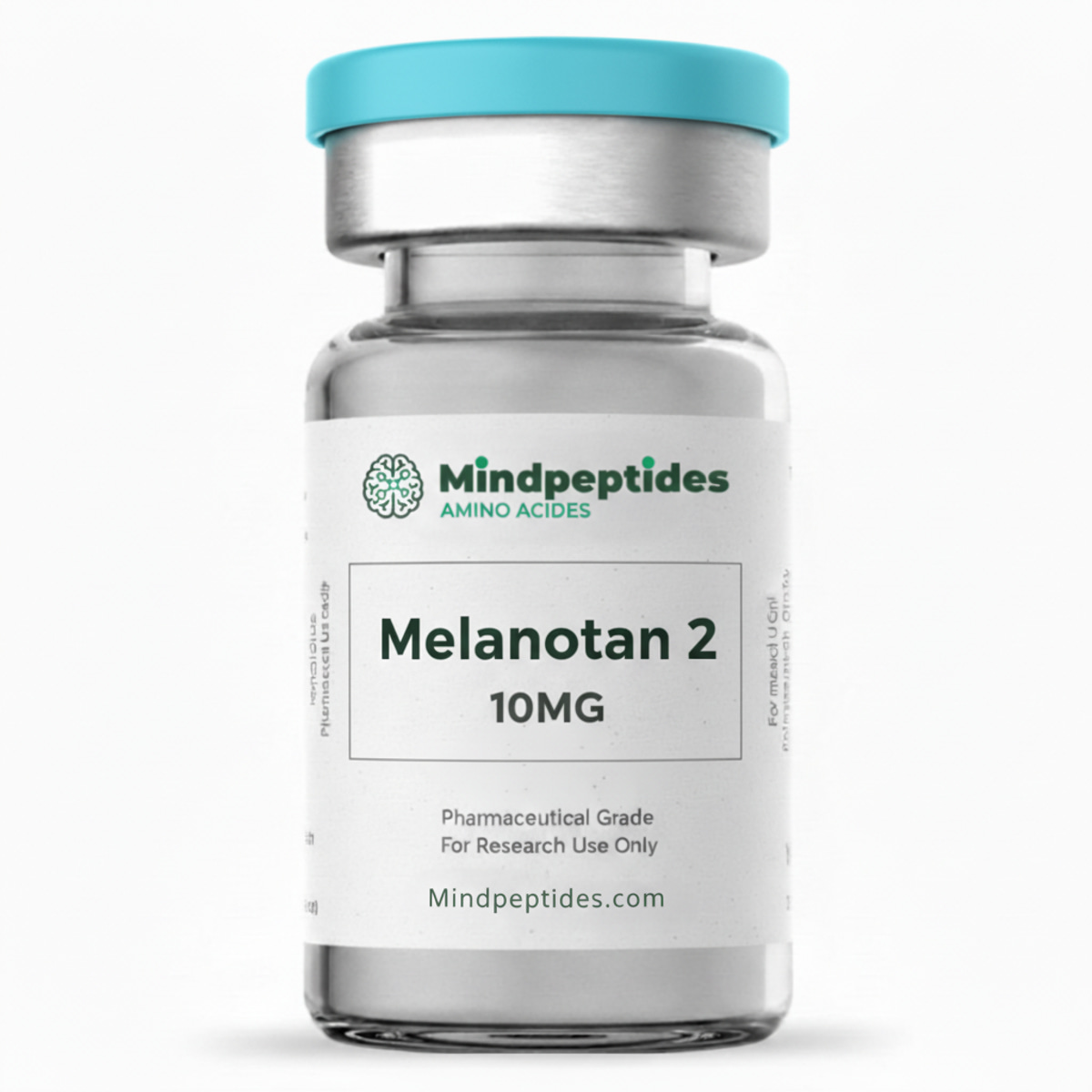
Melanotan 2 (MT-2)
Cyclic Non-Selective Melanocortin Agonist & CNS Signaling Research Peptide
Comprehensive Product Description
Melanotan 2 (MT-2) is a synthetic, cyclic heptapeptide lactam analogue of the endogenous alpha-melanocyte-stimulating hormone (α-MSH). Developed originally at the University of Arizona, this peptide was engineered to overcome the extremely short half-life of natural α-MSH. Mindpeptides synthesizes this compound with a specific lactam bridge between the side chains of Aspartic acid and Lysine. This cyclization rigidly fixes the peptide conformation, drastically enhancing its stability against enzymatic proteolysis and increasing its receptor binding potency.
Unlike its linear predecessor (Melanotan 1), which is highly selective for the MC1 receptor, Melanotan 2 acts as a non-selective agonist with high affinity for MC1R, MC3R, MC4R, and MC5R. This broad receptor profile allows MT-2 to cross the blood-brain barrier and influence central nervous system pathways. Consequently, it is the primary research standard for investigating the intersection of melanogenesis, energy homeostasis, and neuroendocrine signaling. Mindpeptides ensures each batch maintains the precise stereochemistry required for valid experimental outcomes.
Mechanism of Action & Signaling Pathways
Central & Peripheral Receptor Agonism
In peripheral tissues, MT-2 binds to the MC1R on melanocytes, activating the cAMP-MITF pathway similar to MT-1, which drives the production of eumelanin. However, the distinct scientific value of MT-2 lies in its central mechanism. It acts as a potent agonist at MC3R and MC4R in the hypothalamus.
Activation of hypothalamic MC4R is directly linked to the regulation of energy balance and sexual function. Upon binding, MT-2 triggers downstream signaling that suppresses appetite and increases metabolic expenditure. Simultaneously, neural signals are sent to the spinal cord to modulate sexual arousal and erectile function via non-vascular, neurological pathways. This makes MT-2 a unique tool for distinguishing between centrally-mediated physiological responses and peripheral vascular effects.
Expanded Research Applications
- Neuroendocrine & Behavioral Studies: MT-2 is widely utilized to study compulsive behaviors and addiction. By modulating the melanocortin system, researchers investigate its potential to reduce ethanol intake and curb compulsive dietary habits in rodent models.
- Autism & Social Development: Emerging research indicates that oxytocin pathways may be influenced by melanocortin signaling. MT-2 is currently being explored in early childhood development models to assess its efficacy in mitigating features associated with autism spectrum disorders and improving social behavior.
- Sexual Dysfunction Research: As an initiator of sexual arousal via the CNS rather than direct vasodilation, MT-2 serves as a control agent in studies differentiating psychogenic erectile dysfunction from organic causes.
Laboratory Reconstitution Guidelines
Mindpeptides supplies MT-2 as a lyophilized powder which requires proper reconstitution prior to use in assays.
- Solvent: Bacteriostatic water or sterile 0.9% NaCl solution is recommended.
- Procedure: Gently inject the solvent down the side of the vial. Do not shake vigorously. Allow the peptide to dissolve at room temperature or with gentle swirling to avoid destroying the cyclic structure.
- Handling: Once reconstituted, keep the vial cold (4°C) if used within days, or freeze at -20°C/-80°C for long-term storage.



Reviews
There are no reviews yet.