







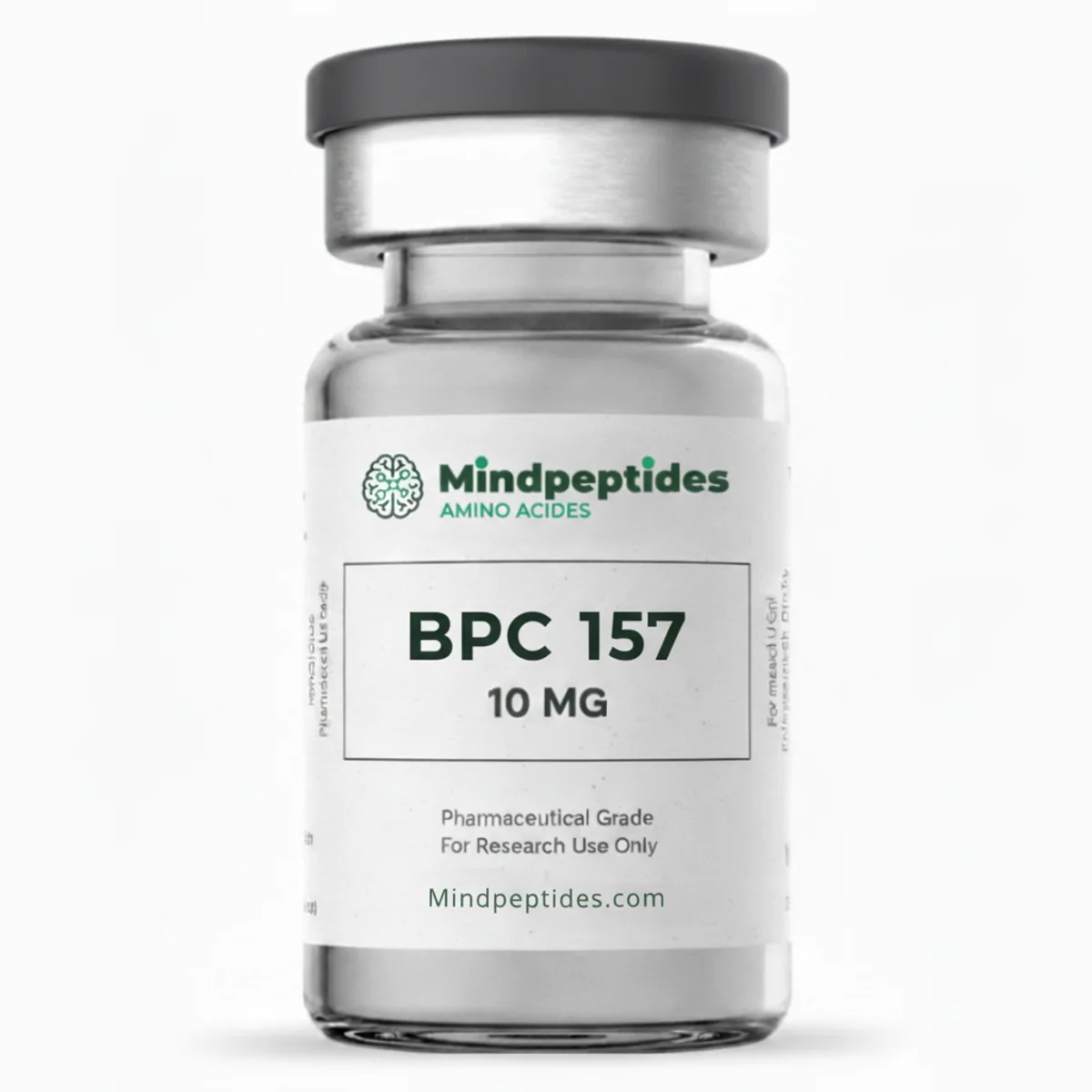
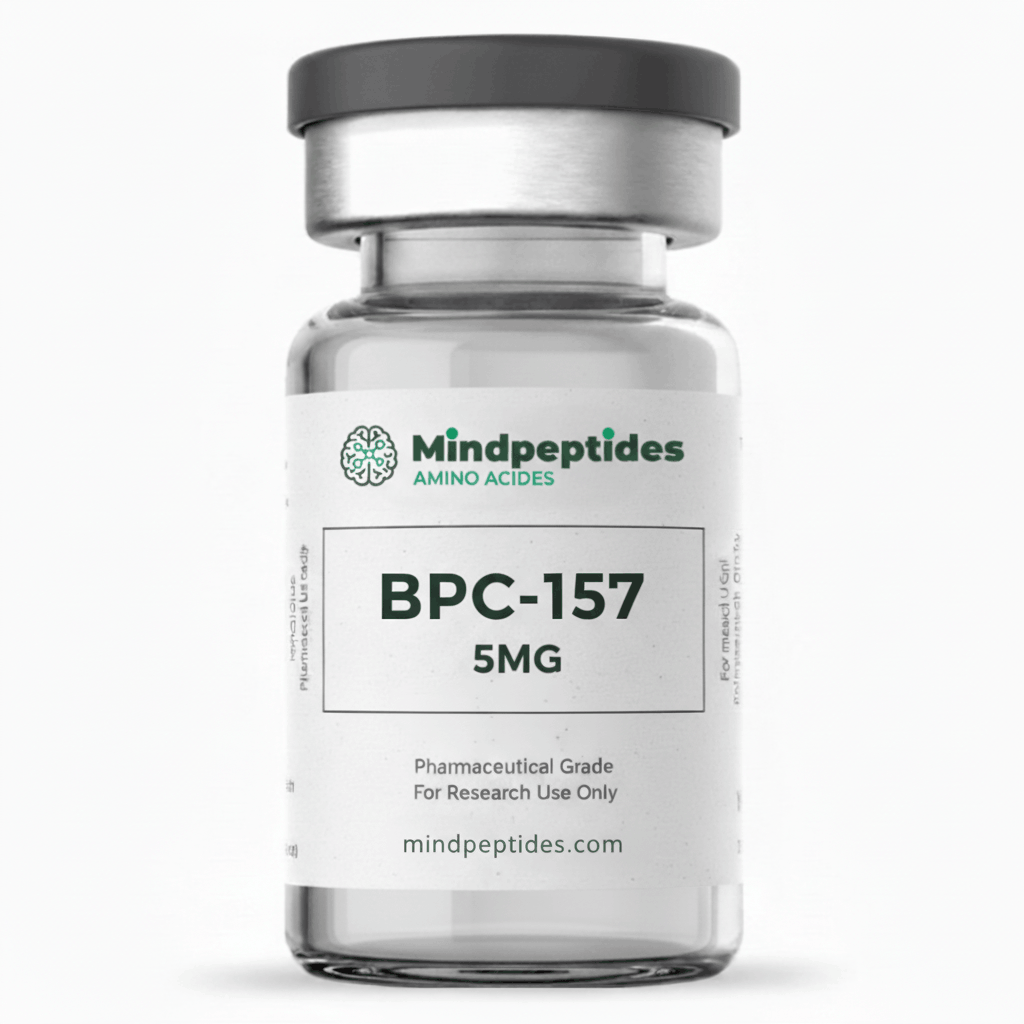
BPC-157 (Body Protection Compound 157)
Synthetic Pentadecapeptide for Tissue Regeneration & Angiogenesis – HPLC Verified
Comprehensive Product Description
BPC-157, chemically defined as a synthetic pentadecapeptide composed of 15 amino acids, is derived from a protective protein naturally occurring in human gastric juice. mindpeptides synthesizes this compound to replicate the partial sequence of the body protection compound (BPC), specifically selected for its remarkable stability and regenerative potential. Unlike many peptides that degrade rapidly in gastric pH, BPC-157 demonstrates exceptional stability in human gastric juice, a property that underscores its biological utility in systemic research models.
The peptide has garnered significant attention in the scientific community for its cytoprotective properties and its ability to accelerate the healing of various tissues, including skin, muscle, tendon, ligament, and bone. mindpeptides ensures that every batch of BPC-157 is produced to a purity of ≥99%, verified by independent analysis. This high level of refinement removes impurities that could skew experimental data, providing researchers with a reliable standard for investigating the peptide’s role in soft tissue repair and gastrointestinal homeostasis.
Mechanism of Action & Signaling Pathways
Angiogenesis & The Nitric Oxide System
The primary mechanism of action for BPC-157 involves the modulation of the Nitric Oxide (NO) system. Research indicates that the peptide interacts with the endothelial nitric oxide synthase (eNOS) pathway, facilitating the generation of NO in a balanced manner. This interaction is critical for endothelial cell protection and the maintenance of vascular integrity.
Furthermore, BPC-157 has been observed to significantly upregulate the expression of the Vascular Endothelial Growth Factor (VEGF) receptor (VEGFR2). By stimulating the VEGF pathway, the peptide promotes angiogenesis—the formation of new blood vessels from pre-existing vasculature. This revascularization process is a cornerstone of its regenerative capacity, ensuring adequate nutrient and oxygen delivery to injured tissues, thereby accelerating the repair of damaged tendons (via fibroblast activation) and gastrointestinal mucosa.
Expanded Research Applications
- Musculoskeletal Regeneration: Extensive preclinical studies utilize BPC-157 to model tendon-to-bone healing. It is observed to enhance the migration and proliferation of tendon fibroblasts and increase the expression of growth hormone receptors in tendon fibroblasts.
- Gastrointestinal Mucosal Healing: BPC-157 is widely researched for its efficacy in treating inflammatory bowel disease (IBD) models, including ulcerative colitis and Crohn’s disease, due to its ability to counteract free radical formation and heal fistulas.
- Cytoprotection & Toxicology: Research suggests the peptide offers organ-protective effects against NSAID-induced toxicity and alcohol-induced gastric lesions, acting as a buffer against oxidative stress.
Laboratory Reconstitution Guidelines
mindpeptides supplies BPC-157 as a stable lyophilized powder which requires proper reconstitution prior to use in assays.
- Solvent: Bacteriostatic water or sterile 0.9% NaCl solution is recommended.
- Procedure: Gently inject the solvent down the side of the vial. Do not shake vigorously. Allow the peptide to dissolve at room temperature or with gentle swirling to avoid destroying the peptide structure.
- Handling: Once reconstituted, keep the vial cold (4°C) if used within days, or freeze at -20°C/-80°C for long-term storage.


Reviews
There are no reviews yet.