





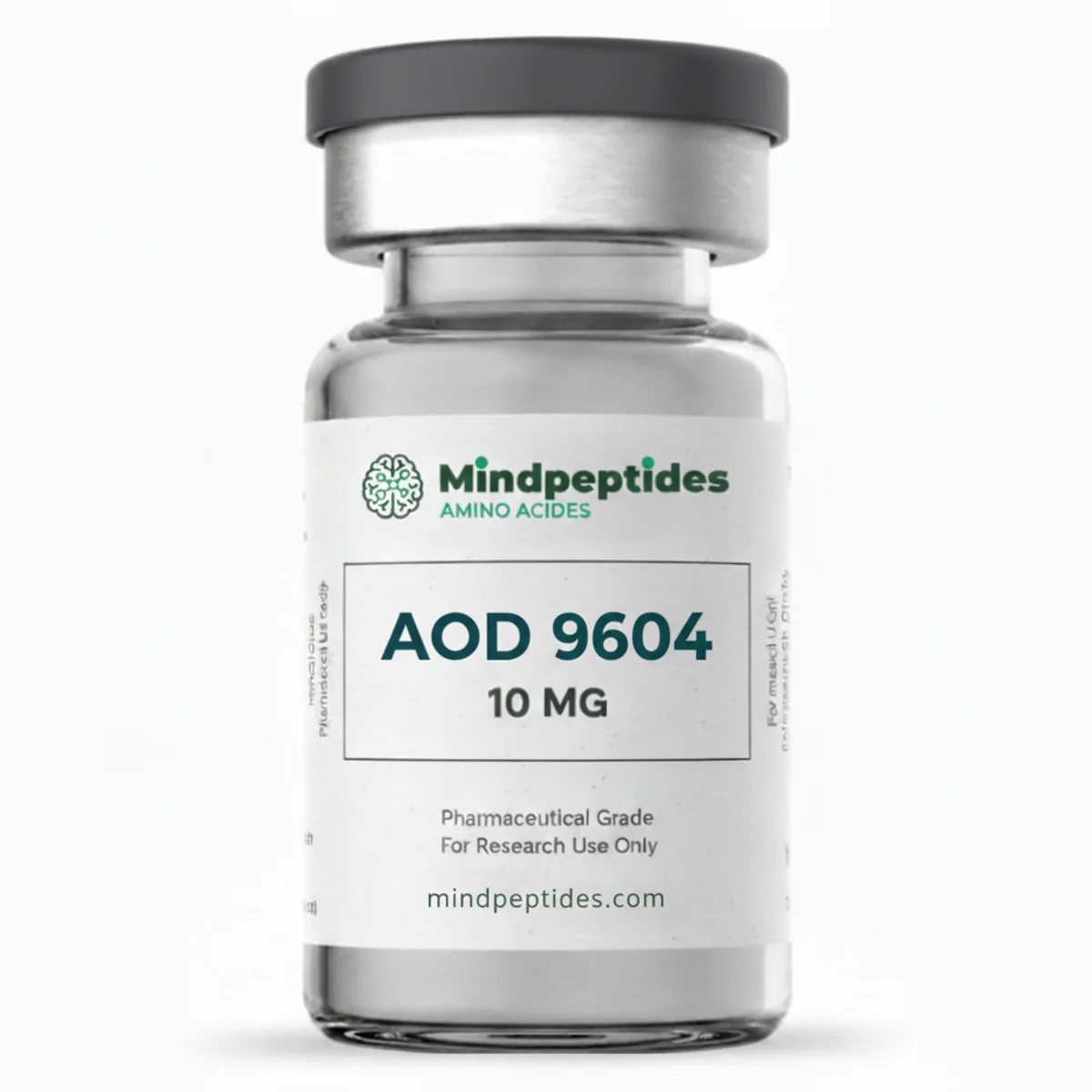
AOD-9604 (Tyr-hGH Frag 177-191)
Selective Lipolytic Peptide & Metabolic Research Agent – HPLC Verified
Comprehensive Product Description
AOD-9604 is a synthetic peptide fragment representing the C-terminal domain (residues 177-191) of human Growth Hormone (hGH), modified with an N-terminal tyrosine residue to enhance stability. Produced by mindpeptides, this peptide isolates the lipolytic (fat-burning) attributes of hGH while systematically excluding the polypeptide regions responsible for diabetogenic effects and insulin-like growth factor-1 (IGF-1) secretion. Researchers utilize AOD-9604 to study metabolic pathways where fat mobilization is required without the confounding variables of systemic growth or insulin resistance.
The structural integrity of AOD-9604 relies on a disulfide bridge between cysteine residues, maintaining a cyclic configuration essential for its biological activity. Unlike full-length hGH, which exerts broad physiological effects, AOD-9604 demonstrates high specificity for adipocytes. This selectivity makes it an invaluable tool for in vitro and in vivo models focusing on obesity, lipid metabolism disorders, and connective tissue repair, as it mimics the fat-releasing action of growth hormone without interacting with the hGH receptor’s growth-promoting domains.
Mechanism of Action & Signaling Pathways
Lipolysis and Inhibition of Lipogenesis
AOD-9604 functions through a dual mechanism in adipocyte signaling. Primarily, it stimulates lipolysis (the breakdown of stored triglycerides into free fatty acids and glycerol) by modulating the activity of hormone-sensitive lipase (HSL) and beta-3 adrenergic receptors. This pathway mimics the beta-oxidation signals usually triggered by fasting or exercise.
Simultaneously, the peptide exerts an antilipogenic effect, inhibiting the pathway responsible for the esterification of fatty acids into new triglycerides (lipogenesis). This regulatory control helps prevent the accumulation of new adipose tissue. Unlike traditional beta-agonists, AOD-9604 does not induce significant heart rate elevation or blood pressure changes in animal models, suggesting a non-autonomic mechanism of action that remains a subject of intense investigation in metabolic research.
Expanded Research Applications
- Obesity & Metabolic Syndrome:
Extensively used in rodent models to evaluate reductions in visceral adipose tissue and improvements in lipid profiles without inducing hyperglycemia or insulin desensitization. - Cartilage & Connective Tissue Repair:
Emerging research indicates AOD-9604 may enhance chondrocyte proliferation and proteoglycan production. It is currently being investigated for its potential in regenerative medicine, specifically for osteoarthritis and tendon repair models. - Mitochondrial Function:
Studies suggest downstream effects on energy expenditure markers, making it a candidate for researching mitochondrial efficiency and substrate utilization in skeletal muscle.
Laboratory Reconstitution Guidelines
mindpeptides supplies AOD-9604 as a lyophilized powder which requires proper reconstitution prior to use in assays.
- Solvent: Bacteriostatic water or sterile 0.9% NaCl solution is recommended.
- Procedure: Gently inject the solvent down the side of the vial. Do not shake vigorously. Allow the peptide to dissolve at room temperature or with gentle swirling to avoid destroying the peptide structure.
- Handling: Once reconstituted, keep the vial cold (4°C) if used within days, or freeze at -20°C/-80°C for long-term storage.


Reviews
There are no reviews yet.